A Century-Old Puzzle
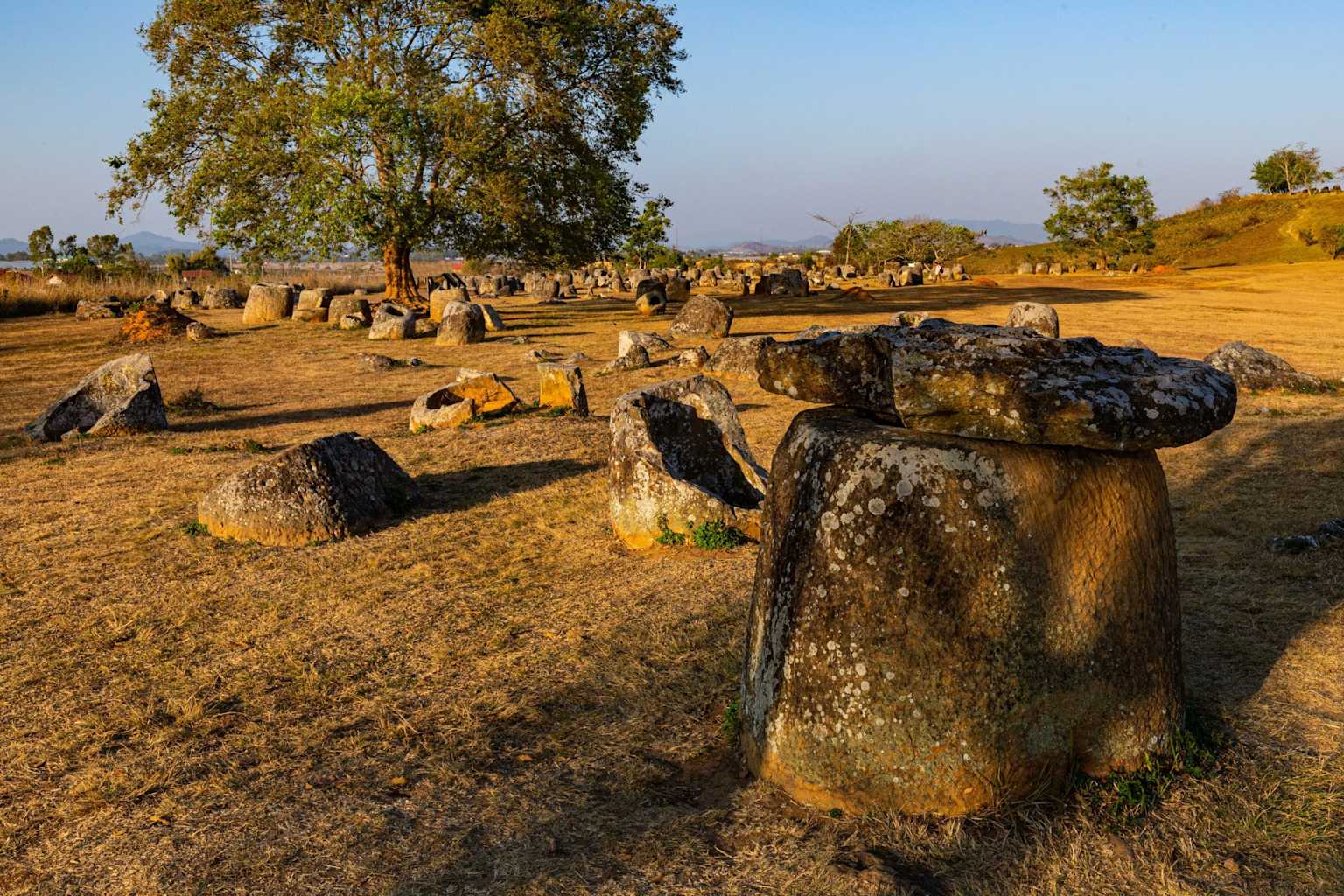
The Plain of Jars, located on the Xieng Khouang Plateau near the remote town of Phonsavan, contains thousands of giant stone jars — some weighing several tons — that have puzzled researchers since French archaeologist Madeleine Colani first studied them in the 1930s. While scholars long suspected the jars were connected to burial practices, no one had confirmed the theory with definitive physical evidence until now. newscientist.com sciencenews.org
The jar in question, designated Jar 1 at Site 75, measures more than two meters across and sits in a forested area roughly 70 kilometers northeast of Phonsavan. Inside, researchers found right femurs and skulls from 19 individuals and teeth from 37 people, including adults and a child as young as 18 months old. smithsonianmag.com anthropology.net
Generations of the Dead
Radiocarbon dating of eight bone and tooth samples revealed that remains were deposited over a span of approximately 270 years, from around 890 to 1160 CE. The bones were disarticulated — meaning joints had already separated before placement in the jar — indicating this was a secondary burial practice. Lead researcher Louise Skopal and her team hypothesize that bodies were first placed in smaller jars found nearby, where flesh was allowed to decompose before cleaned bones were transferred to the larger communal vessel. anthropology.net smithsonianmag.com sciencenews.org newscientist.com
“The number of individuals also suggests the jars were owned by family or extended family groups,” Skopal noted. “They likely served as places where ancestral rites were performed over generations.” anthropology.net
Broader Implications
The discovery suggests that the thousands of similar stone jars across northern Laos likely served a comparable purpose, pointing to a vast ancient burial complex tied to ancestor worship. Some jars also contained ashes and burned bone fragments from cremations, a later Buddhist tradition, indicating the vessels may have been reused after Buddhism was introduced to the region. DNA testing is now underway to determine how the individuals were related to one another. smithsonianmag.com sciencenews.org