
Volvo Cars Abandons Growth Target as China Collapses
Volvo Cars on Thursday scrapped its full-year sales growth target after reporting a 35% sales plunge in China during the second quarter, sending shares down roughly 8% in Stockholm trading — their worst session since February. The Swedish automaker, majority-owned by China’s Geely Holding, posted an operating profit of 800 million Swedish crowns for the April-to-June period, down from 1.6 billion crowns in the first quarter, with its margin squeezed to 1.1%. Rreuters
Rrte
Chief executive Håkan Samuelsson said the company had dropped its ambition for full-year volume growth, describing the market as “pretty bleak”. The pain extends beyond weak demand: rising input costs for aluminium and lithium — materials critical to electric vehicles — have compounded Volvo’s difficulties. A Yahoo Finance analysis noted that aluminium supplies feeding EV production are caught behind the Strait of Hormuz blockade, while industry research firm CRU Group cut its 2026 global light vehicle production forecast by more than 600,000 units, citing six-to-eight weeks of material disruption from the strait’s closure. Ttheedgemalaysia
Ccrugroup
YYahoo Finance
Boeing Holds Firm While Airbus Blinks
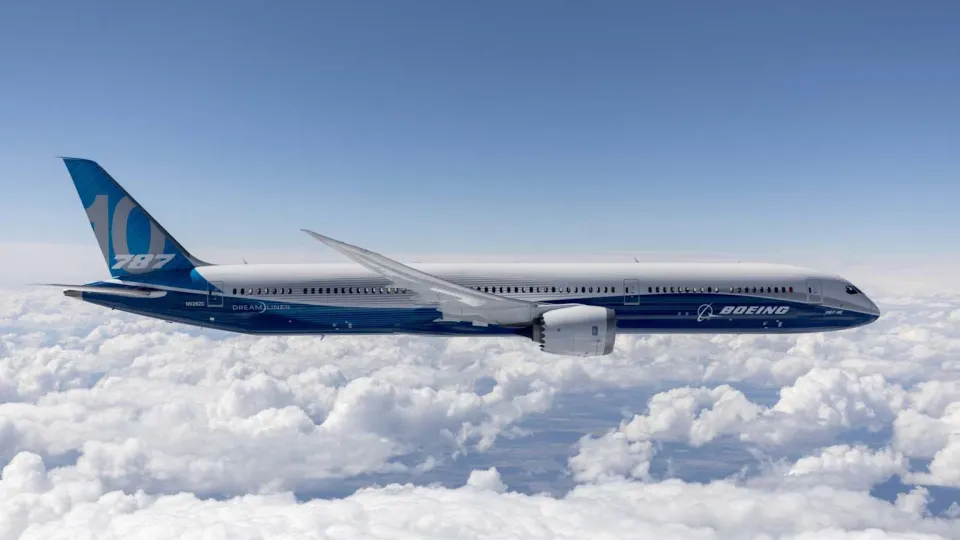
Against this backdrop, Boeing struck a defiant tone on Saturday ahead of the Farnborough Airshow, maintaining its 20-year forecast for 43,625 new jetliner and freighter deliveries between 2026 and 2045. The U.S. planemaker acknowledged near-term headwinds, projecting air passenger traffic growth of just 2.3% this year — less than half of 2025’s 5.3% rate — but expects a rebound to 6-7% in 2027. Mmarketscreener
Bbusinesstimes
Airbus, by contrast, trimmed its own 20-year industry demand forecast by 1% to 42,060 passenger jet deliveries, explicitly citing the Iran war and trade tensions as factors that “slammed the brakes” on what had been a sharp post-pandemic recovery in airline activity, according to Reuters. Rreuters
A Conflict With No End in Sight
Iran’s Islamic Revolutionary Guard Corps first announced the strait’s closure in late February, declaring it shut “until further notice and until US interventions in the region end”. The waterway, through which roughly 20% of the world’s oil supply transits, saw tanker traffic fall to a two-month low in mid-July as renewed U.S.-Iran strikes heightened safety concerns. Bloomberg estimated the closure reduced global oil flows by some 11 million barrels per day. Aaa
Rreuters
Bbloomberg
The ripple effects now stretch from petrochemical supply chains to car factories to airline boardrooms — with no diplomatic resolution on the horizon.